The Georgians love a stuffed bread. Most famously, there is khachapuri, but there is also pkhlovani, there is lobiani and, for the carnivores amongst us, there is kubdari.
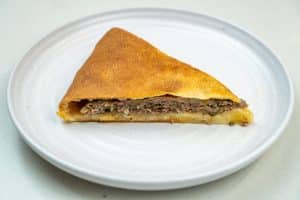
Kubdari is basically the meaty version of Imeruli khachapuri and it hails from the mountainous Svaneti region in the north of the country. It’s not difficult to make, and the results are absolutely delicious – super meaty and packed with the distinctive flavours that really make it Georgian.
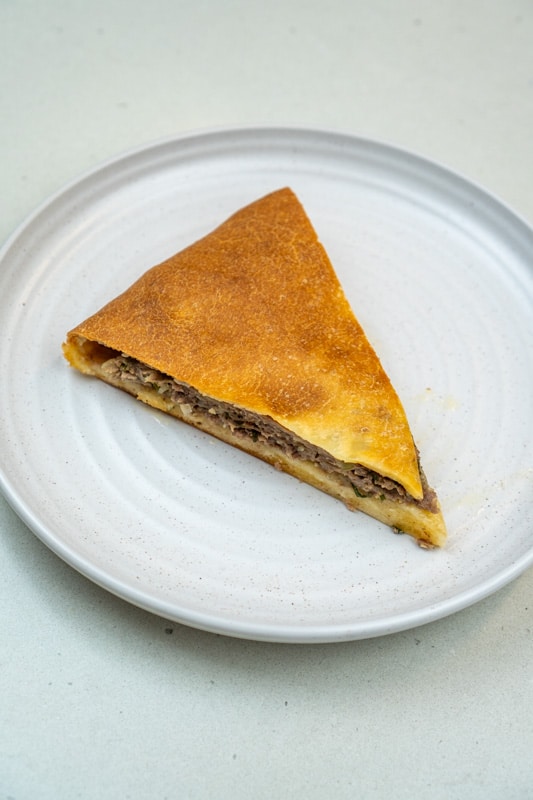
How to Make Georgian Kubdari
The bread begins with the dough, which is an easy enriched dough that is simple to make (either by hand, or with a stand mixer) and bakes up to be soft and supple while still substantial enough to manage the filling.
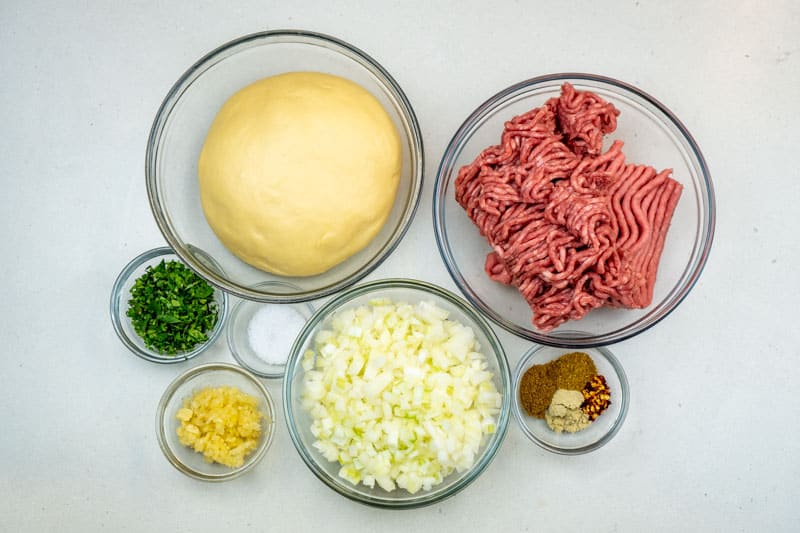
It is the same dough I use in my pkhlovani recipe and it works well for all of my Georgian bread recipes.
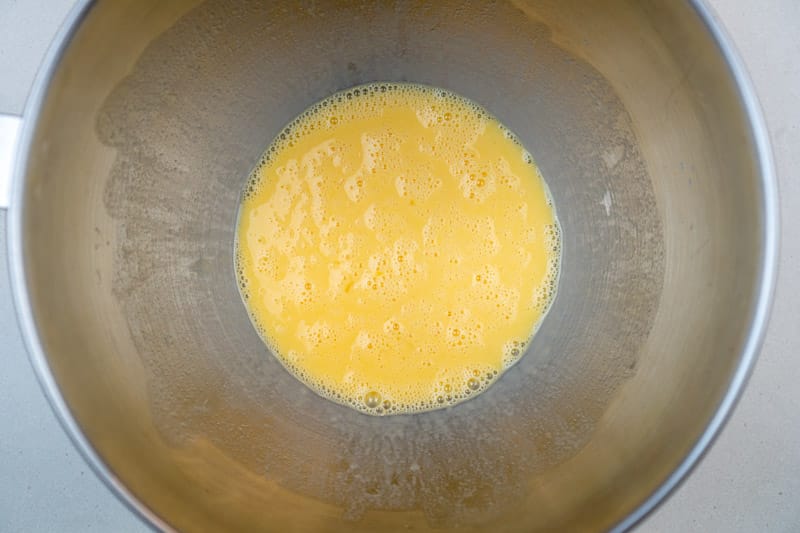
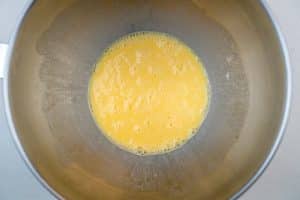
Start by melting some butter in a bit of milk, then adding that to a bowl along with a whole egg and one egg yolk. Whisk this to combine.
Then add in some flour and a touch of yeast.
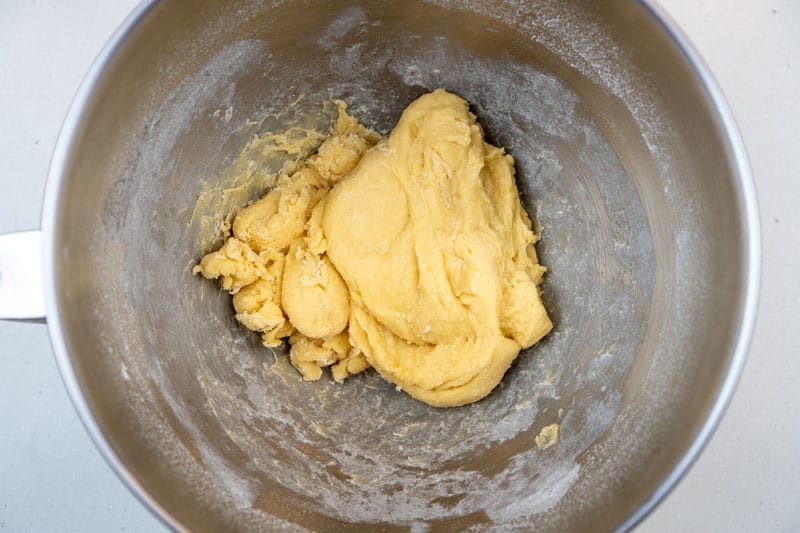
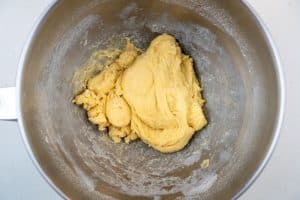
Use a wooden spoon (or a stand mixer with the dough hook attachment) to mix just until the flour is completely hydrated and a shaggy dough forms. Then, cover the bowl and let it rest for about 15 minutes.
After this rest, add some salt to the dough and then turn it out onto a clean work surface and knead it for a good 10-15 minutes to develop the gluten.
If you’re using a stand mixer, you can knead it in there for closer to 8 minutes.
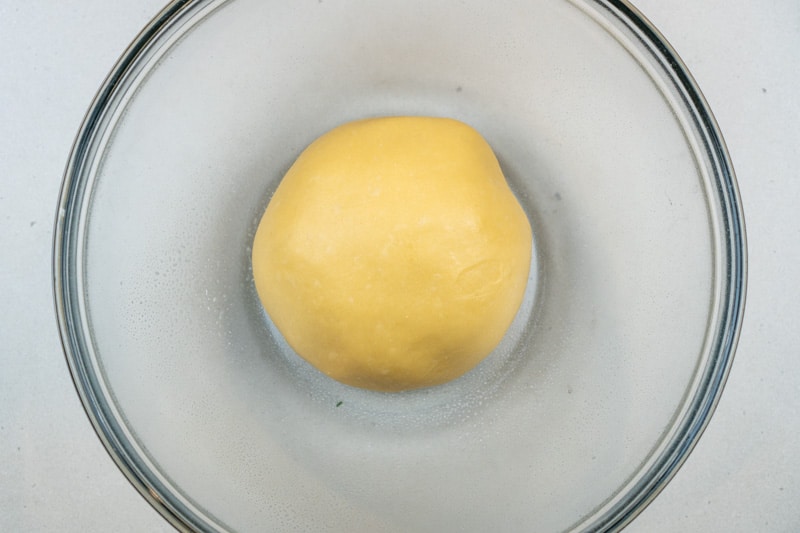
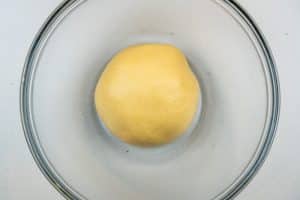
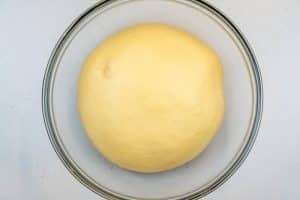
Once kneaded, gather the dough into a taut ball, place it in a large bowl, cover it, and let it rise at room temperature until it has doubled – this will take about an hour or so.
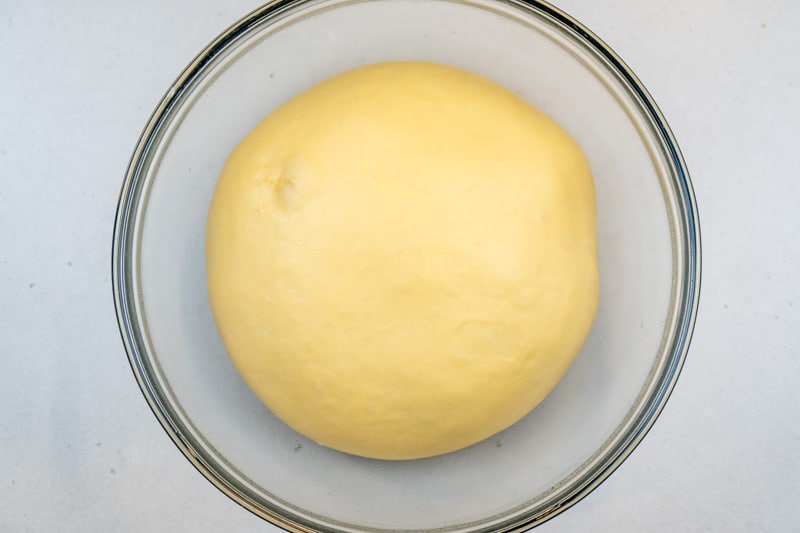
Near the end of the dough’s rise, you can start getting the filling together. This is really easy and only takes a few minutes.
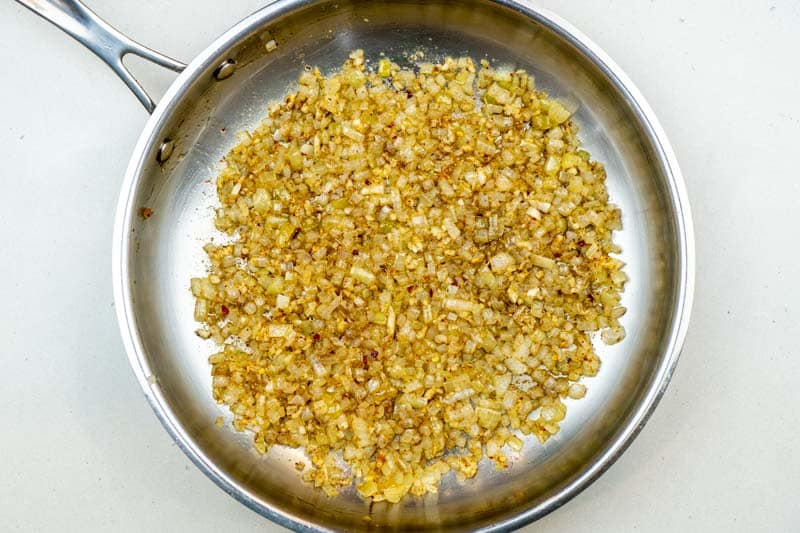
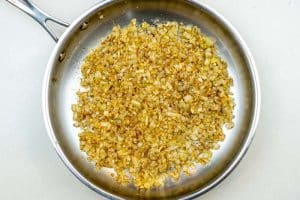
Start by adding some neutral oil to a large skillet and setting it over medium heat. Once the oil is shimmering, add a diced onion and a bit of salt. Cook, stirring every so often, until the onion is nice and softened, about 5 minutes.
Then, add in some minced garlic and your spices. For a great Georgian flavour, I like to add cumin, blue fenugreek, coriander seed and a touch of chili flakes. Cook this for only about thirty seconds longer.
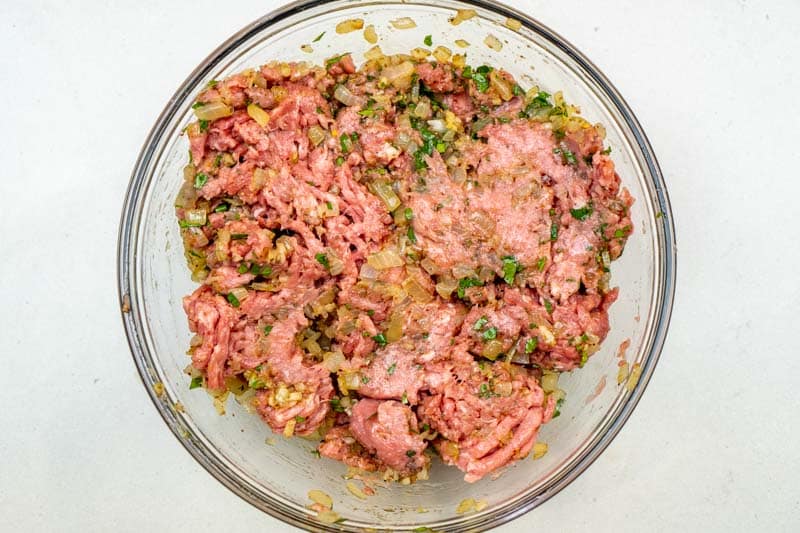
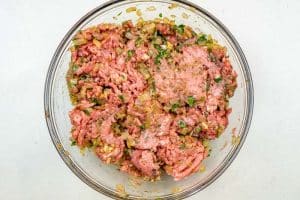
Meanwhile, add some minced lamb to a large bowl and season it with salt and pepper. Then, scrape the onion mixture into it, add some chopped cilantro, and mix until everything is well combined.
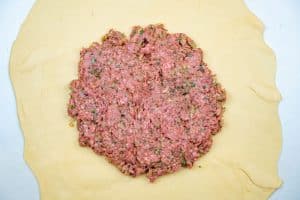
At this point, it’s time to start rolling out your dough! Very lightly flour a work surface and roll the dough into an even circle that is about 5 millimetres thick.
Once it’s rolled, you can pile the filling inside of it, ensuring that you leave a border large enough to fully encase the filling.
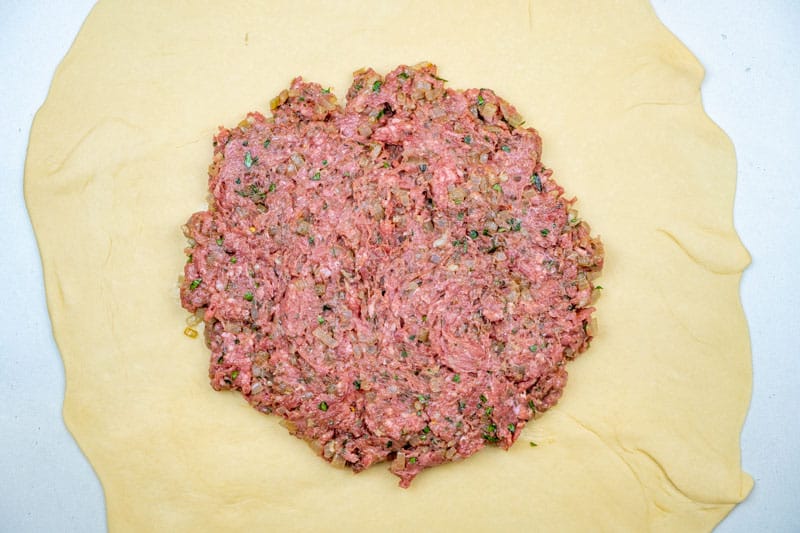
After you’ve added all of the filling, go ahead and fold the edges of the dough over it, pinching them to seal the filling inside completely.
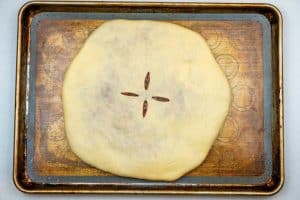
Flip the kubdari over and run your rolling pin over it, gently, to even out the dough and filling. Then, transfer it to a parchment-lined baking tray.
Cut four steam vents in the pie and then let it rise again for about 30 minutes (this is a good time to preheat your oven!).
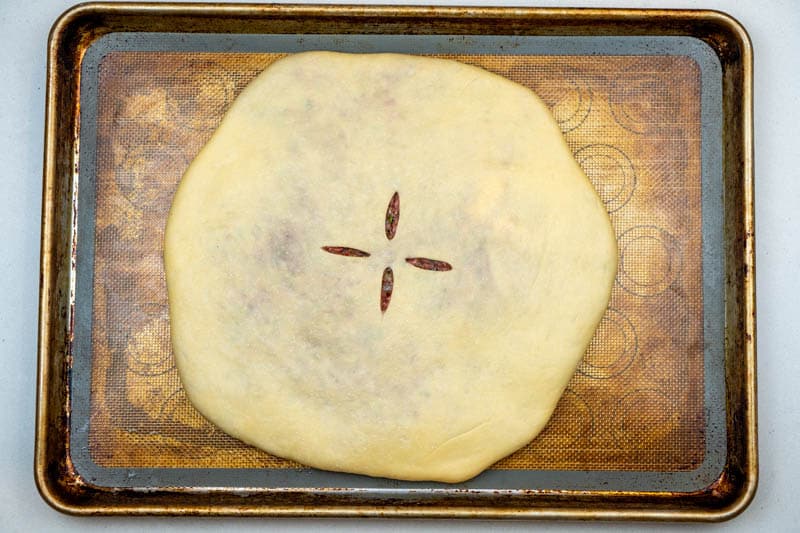
Once this is done, move it to the oven and bake it until it’s golden and puffed – about 20-25 minutes, depending on the oven.
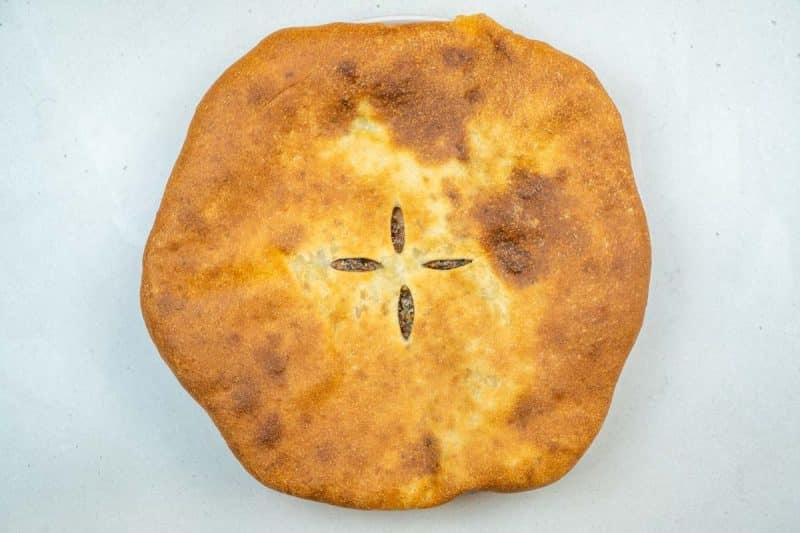
The hardest part now is that you do need to let it rest for about 10 minutes before cutting into it – this just helps the juices settle. But once the rest is done, go ahead and cut it into wedges and enjoy!
Kubdari: Georgian Meat Pie
Ingredients
Dough
- 90 ml (6 tbsp) whole milk
- 25 g (2 tbsp) unsalted butter
- 1 egg
- 1 egg yolk
- 250 g (2 cups) bread flour
- 4 g (1 ⅓ tsp) instant yeast
- 5 g (1 tsp) salt (see note 1)
Filling
- 1 yellow onion finely diced
- 5 g (1 tsp) salt divided (see note 1)
- 5 cloves garlic minced
- 1 tsp ground cumin
- ½ tsp blue fenugreek (see note 4)
- ½ tsp ground coriander seed
- ¼ tsp chili flakes
- 500 g (1 lb) minced lamb (see note 5)
- 10 g (2 tbsp) fresh coriander/cilantro finely chopped
Instructions
- Add the milk and the butter to a small saucepan and set it over medium heat. Gently heat the milk only until the butter is melted. Pour the milk into a large mixing bowl or the bowl of a stand mixer. Add the egg and egg yolk and whisk until combined.

- Add the flour and yeast and stir with a wooden spoon or flexible spatula (or in a stand mixer fitted with the dough hook) until just combined and no dry spots remain. Cover the bowl and allow to rest for fifteen minutes.
- Add the salt and knead briefly until fully incorporated into the dough. Turn out onto a clean work surface and knead until the dough is smooth, supple and elastic – about 10-15 minutes (see note 2). Avoid adding any extra flour unless the dough is unmanageably sticky. If using a stand mixer, knead on medium for 8-10 minutes.
- Gather the dough into a tight ball. Add it to a large, lightly oiled bowl and cover with plastic. Allow to rise in a warm place until doubled in size – about 1 hour (see note 3).
- Meanwhile, make the filling. Add a tablespoon of neutral oil to a large skillet and set over medium heat. Once shimmering, add the onion along with ¼ of the salt. Cook, stirring occasionally, until the onion is softened, about 5 minutes. Add the garlic, cumin, fenugreek, coriander seed and chili flakes and cook for a further 30 seconds. Remove from the heat.
- Add the meat to a large mixing bowl along with the remaining salt and a generous grind of pepper. Stir to combine, then scrape in the onion mixture and the cilantro. Stir until well incorporated.
- Preheat oven to 200°C/400°F. When the dough has risen, lightly flour a work surface and turn out the dough, pressing lightly to de-gas. Use a rolling pin to roll the dough into an even circle about 5mm (roughly ¼ in) thick. Be careful not to use too much flour, as this can make it difficult to seal in the filling. Pile the filling into the centre of the dough, leaving a roughly 8 cm (3in) border.
- Fold the border of the dough over the filling, pinching to encase the filling completely in the dough. Flip the dough over and gently roll out until it reaches about 25-30 cm (10-12 in) in diameter. Cut four 2 cm long (¾ in) slits in the centre of the dough, for steam release. Move to a parchment-lined baking tray and allow to rest until slightly puffed, about 30 minutes.
- Move to the oven and bake until it's puffed, golden and crisp, about 20-25 minutes. Allow the kubdari to rest for at least 10 minutes before slicing into 8 wedges and serving.
Notes
- For best results, measure salt by weight, as different salts vary in crystal size and density.
- You’ll know the dough is properly kneaded when it passes the windowpane test. Pinch off a ping-pong ball-sized piece of dough and gently stretch it between your fingers. The dough should stretch into a thin, translucent sheet that lets light pass through without tearing.
- I like to take a photo of the dough before letting it rise to gauge how much it has risen, as the time it takes can depend on the ambient temperature of the room.
- Use regular fenugreek if you cannot find blue fenugreek.
- I like lamb in this recipe, but you can swap in beef or even use a mixture of lamb and pork or beef and pork if you desire.
Nutrition
Disclaimer: Nutritional information is automatically generated and provided as guidance only. Accuracy is not guaranteed.
Kubdari is the carnivore’s answer to khachapuri, and it is a decidedly delicious one! It’s relatively easy to make and sure to be a crowd-pleaser.
Are you after a Svanetian kubdari recipe? Have any questions? Let me know in the comments!