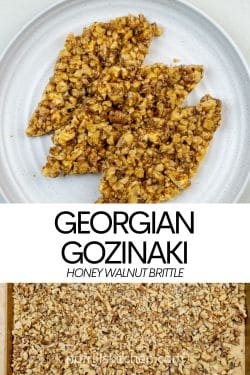
There aren’t a lot of sweets in the realm of Georgian cuisine, but there is one that is highly important to one of the most prominent holidays. Gozinaki, a kind of nut brittle, is served on tables everywhere at the New Year, which is one of the biggest holidays in Georgia.
Made with honey and, of course, walnuts (though hazelnuts are also sometimes used), this is a simple sweet to make and it’s the perfect way to end a Georgian feast.
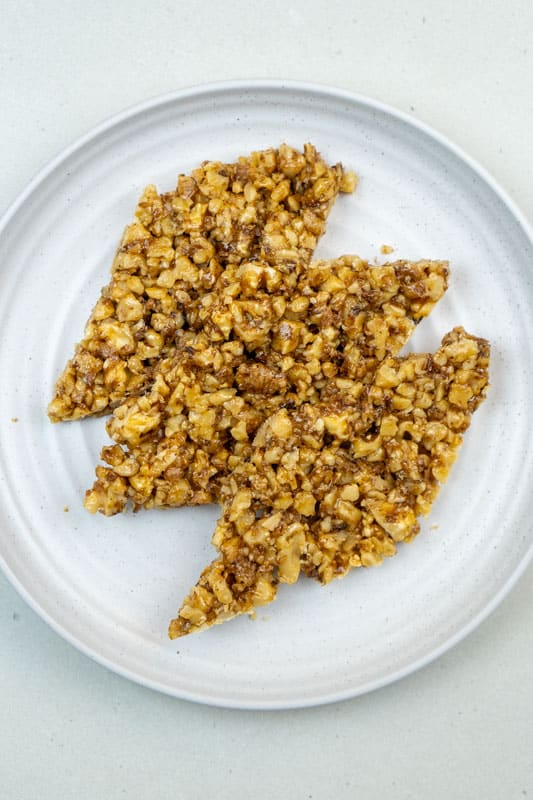
How to Make Georgian Gozinaki
Unlike the other popular Georgian sweet, churchkhela, this one can be enjoyed in roughly an hour and is much simpler to make. It also only requires three ingredients: walnuts, honey and sugar.
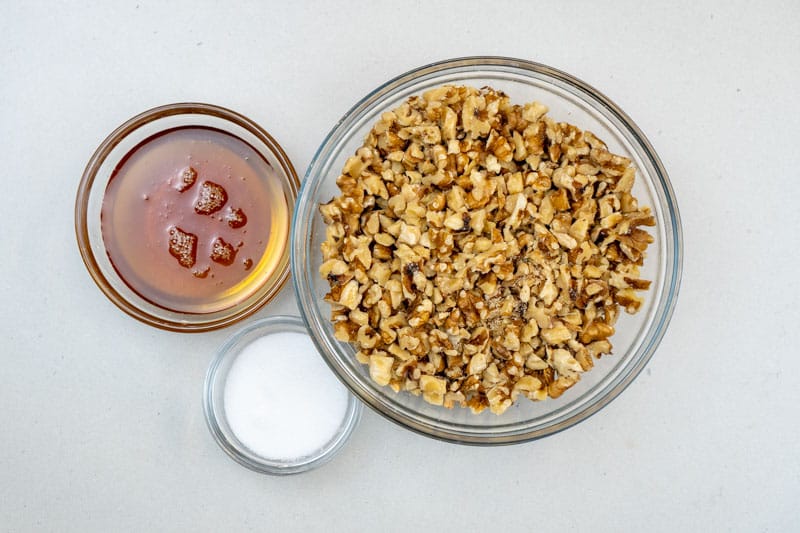
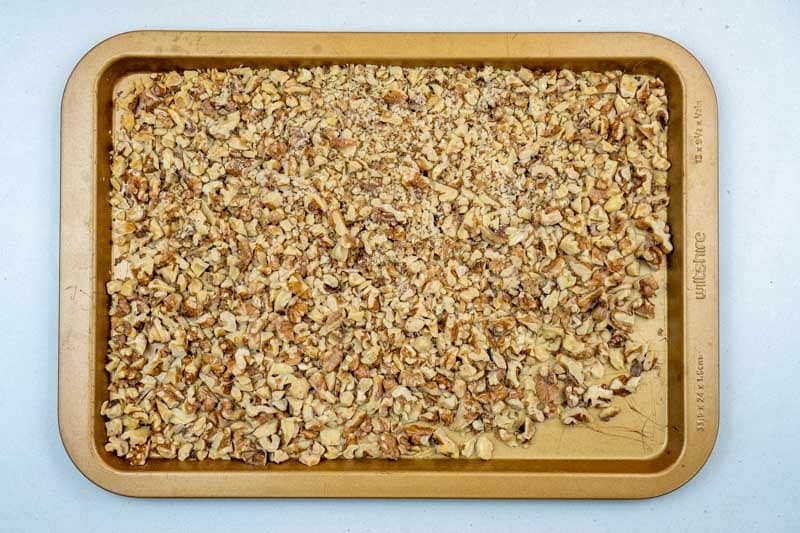
Start by chopping and toasting the walnuts. The toasting step really brings out the flavour and amplifies the final product, so I urge you not to skip it.
Just roughly chop the nuts and then spread them out onto a rimmed baking tray. Toast them in the oven for about five minutes, just until they’re nice and fragrant. Then, set them aside until you need them.
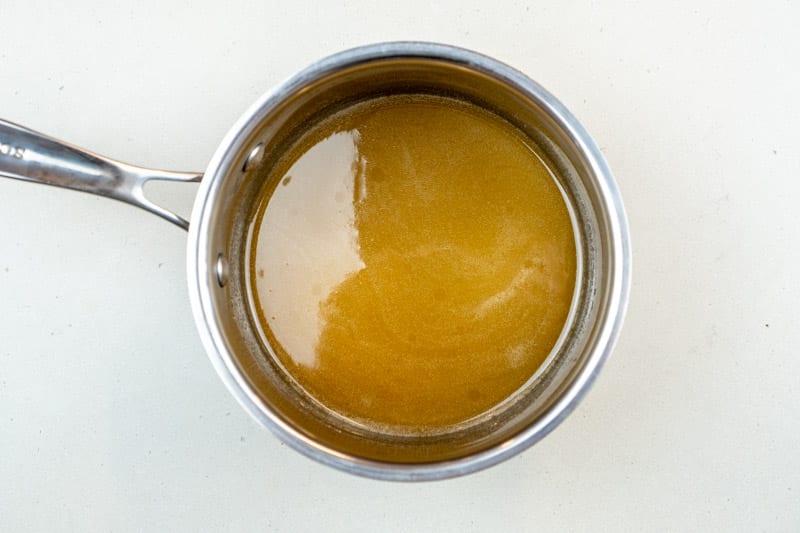
Moving on, it’s time to make the honey syrup, which is so incredibly easy. For this, all you need to do is add some honey to a small saucepan and set it over medium heat.
Use a silicone spatula to stir constantly to prevent scorching, and bring the honey up to a boil.
Once it’s boiling, you’ll notice the honey begin to expand and foam up. Keep stirring and cooking the honey for about five more minutes, just until it has a nice nutty aroma and it has darkened in colour. Congratulations, you’ve now caramelised honey!
To the honey, now add some white sugar and, stirring constantly, cook this for a further two minutes.
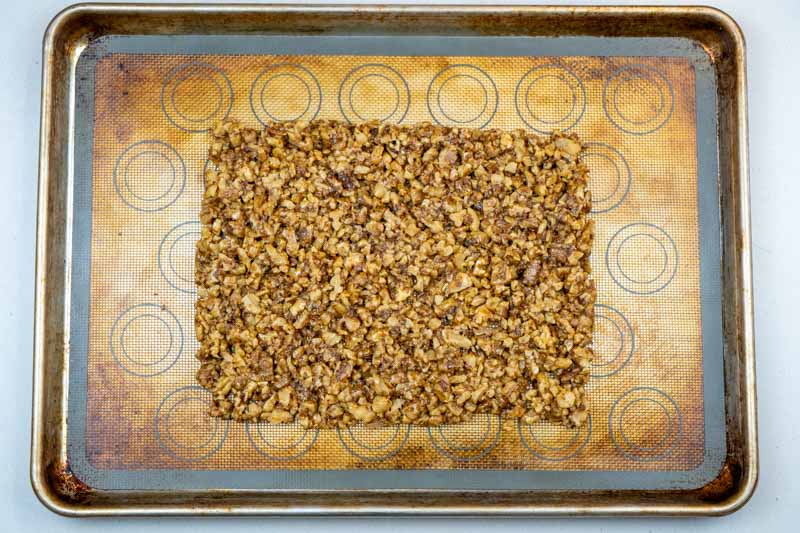
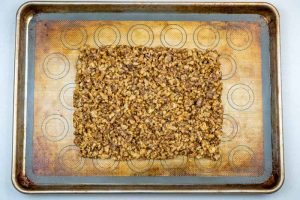
Then, all you need to do is add your toasted walnuts to the honey syrup. Stir to ensure they are evenly coated in the mixture, then scrape them out onto a parchment-lined baking tray.
Use a spatula to compact the walnut mixture into a rectangle that is about 1 centimetre thick.
Then, let it cool completely and set for about an hour (though this may be quicker depending on the room’s ambient temperature).
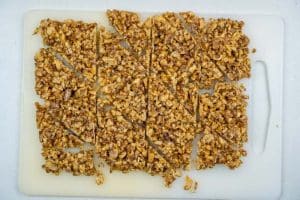
Once the slab is completely set, you can now go ahead and cut the gozinaki. Traditionally, they are cut into a diamond shape, which can be done by making diagonal cuts one way along the slab and vertical cuts the other way.
For clean cuts, it helps to heat the knife – you can do this by either running the blade under hot tap water before each cut or using a blow torch.
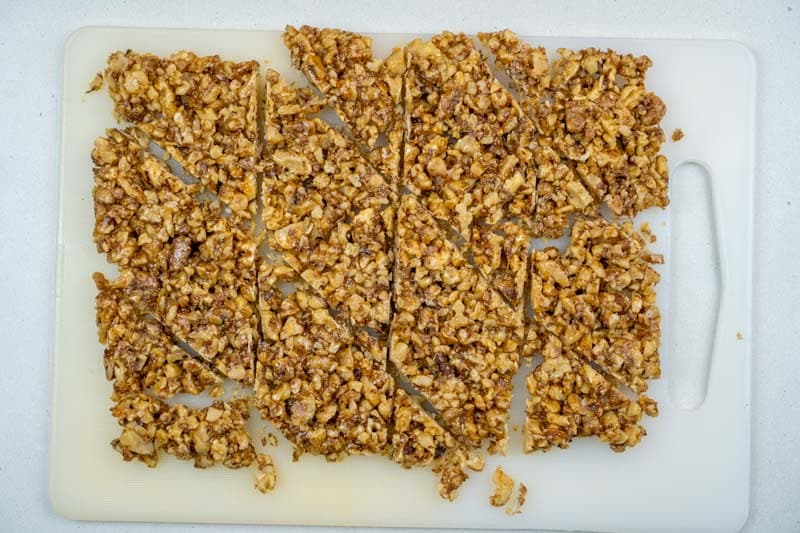
And that is it! Go ahead and enjoy your gozinaki right away, or store it in an airtight container at room temperature for up to a week.
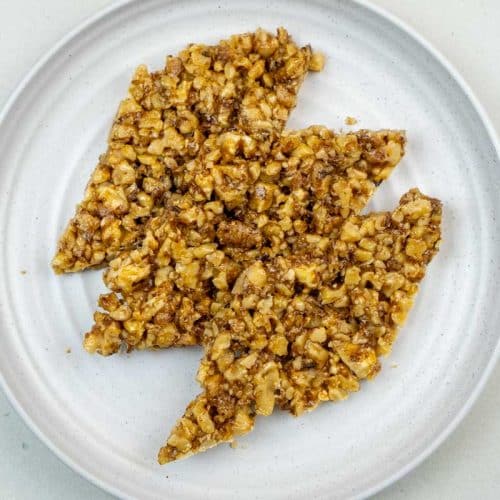
Gozinaki: Georgian Honey Walnut Brittle
Ingredients
- 300 g (2 ½ cups) walnut halves coarsely chopped (see note)
- 100 g (⅓ cup) honey
- 25 g (2 tbsp) caster sugar or granulated sugar
Instructions
- Preheat the oven to 180°C/350°F. Add the walnuts to a rimmed baking tray and move to the oven for 5 minutes, or until toasted and fragrant. Line another rimmed baking tray with parchment paper.

- Meanwhile, add the honey to a small saucepan and set over medium-low heat. Stirring with a silicone spatula to prevent scorching, heat the honey until it begins to foam and expand. Continue cooking until it has a distinct nutty fragrance and the honey has darkened – about 5 minutes. Add the sugar and cook, stirring constantly, for a further 2 minutes.
- Stir in the toasted walnuts and mix until they are completely coated in the honey mixture. Scrape the nut mixture onto the lined baking tray and compact it into a rectangle about 1cm thick. Allow to cool until completely set and brittle, about 1 hour.
- Run a sharp chef's knife under hot tap water to warm the blade. Dry it completely. Make one cut diagonally across the nut slab. Warm the blade again and repeat, spacing the next diagonal cut roughly 4cm from the first. Continue the diagonal cuts, warming the blade between each, until the whole slab is cut. Then, make equally spaced vertical cuts, warming the blade between each. Serve.
Notes
Nutrition
Disclaimer: Nutritional information is automatically generated and provided as guidance only. Accuracy is not guaranteed.
Gozinaki is a fun and simple Georgian sweet that is perfect for a New Year celebration – but it’s great any time of the year.
Are you wondering how to make gozinaki? Have any questions? Let me know in the comments!