You will be hard-pressed to find a food that is more comforting to me than pierogi. These delicious dumplings are found throughout Eastern Europe (known, for instance, as vareniki in Ukraine or pelmeni in Russia) and can be filled with anything from potato, cheese, fruit, minced meat or – in this case, mushroom and sauerkraut.
I used to always be a cheese and potato (pierogi ruskie) loyalist, but in recent years, I’ve really grown to love the mushroom and cabbage version – so much so that I think they’re my favourite. And if you want to make some authentic Polish pierogi at home in your kitchen, then this recipe is for you!
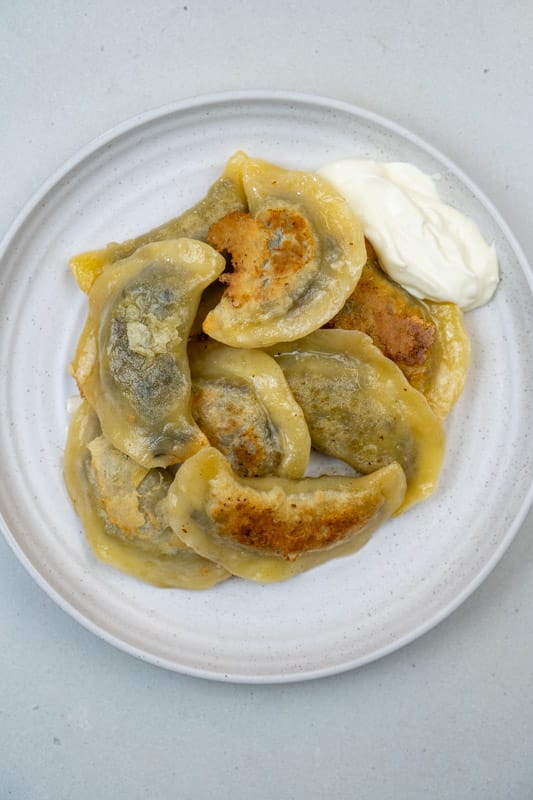
How to Make Mushroom & Sauerkraut Pierogi
Start with making your dough – which can be made in advance. You can also double or triple the recipe if you’re going to be making a lot of dumplings.
The dough is universal, so it can be used for both sweet and savoury pierogi. In fact, it’s the same dough I use in my cherry varenyky.
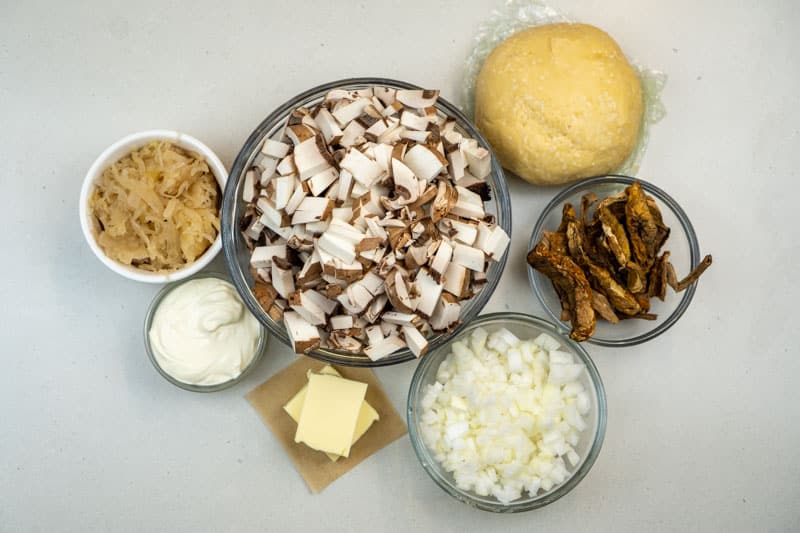
Start by mixing together some flour and salt. Then, add some room temperature butter to the flour and use your fingertips to combine it until there are no visible pieces of flour remaining.
In a small bowl, whisk together a room-temperature egg with some sour cream. Make a well in the flour mixture and pour the egg mixture into it. Mix with a spoon until a shaggy dough forms, then turn the dough out onto a work surface.

Knead the dough until it comes together cleanly and it’s sticky, cohesive and pliable. Then, go ahead and cover it in some plastic and refrigerate for at least an hour – or up to 48 hours.

In the meantime, you can go ahead and make your filling. Start by rehydrating some dried porcini mushrooms in a bit of boiling water.
Set these aside for about fifteen minutes before removing them from the liquid and roughly chopping them. Be sure to hang onto the liquid – you’ll use it later!

While the dried mushrooms are soaking, add some butter and a bit of oil to a large pan and set it over medium-high heat.
Once the butter is melted and foamy, add some chopped fresh mushrooms along with a generous pinch of salt.
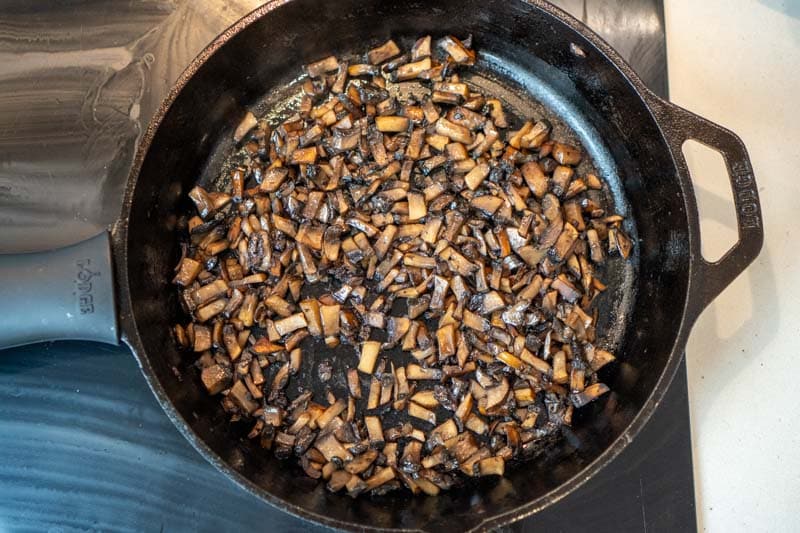
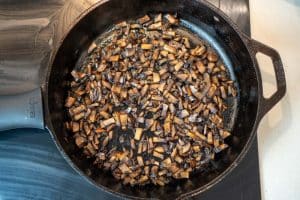
Go ahead and cook the mushrooms until they’re deeply browned – this will take about 10 minutes. Then, add in a diced onion and cook until it is softened – another 5 minutes or so.
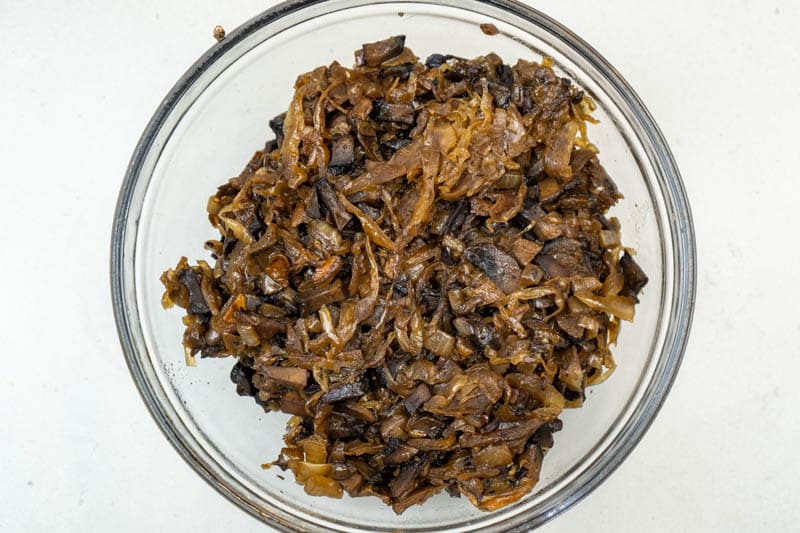
At this point, go ahead and add in your chopped porcini mushrooms, some sauerkraut that you’ve drained and rinsed and the mushroom soaking liquid.
Stir to combine and allow to simmer until the majority of the liquid has evaporated. Taste to adjust for seasoning, adding some salt and pepper if necessary, and then remove from the heat.
Now, it’s time to assemble! Lightly dust a work surface with flour (avoid using too much flour – you may struggle to seal your dumplings if you do). Then, roll out your dough until it’s about 3mm (⅛ in) thick and it has a diameter of around 50cm (20in).
Punch out some dumpling wrappers using an 8cm (3in) circular cutter (or use a drinking glass if you don’t have this). The dough and filling will allow you to make about 28-30 pierogi.

Now, all you need to do is spoon a small amount of filling into the centre of each dough round. Fold the dough over the filling and pinch very tightly to seal. Place on a parchment-lined baking tray and repeat with the remaining filling and dough.
If you’re making these in advance, now is the time to freeze the pierogi. You can add them to the baking tray to the freezer until they’re solid and then move them into bags or containers. When it comes time to cooking, you can cook directly from frozen – just add a few minutes onto the cook-time!

If you’re cooking right away, go ahead and bring a large pot of water to a rolling boil. Also, melt some butter in a skillet at the same time.
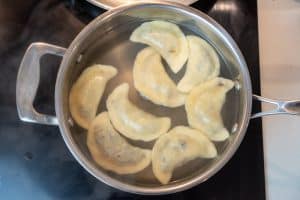
Once the water is boiling, add your dumplings and cook until they float to the top – this will only take a few minutes.

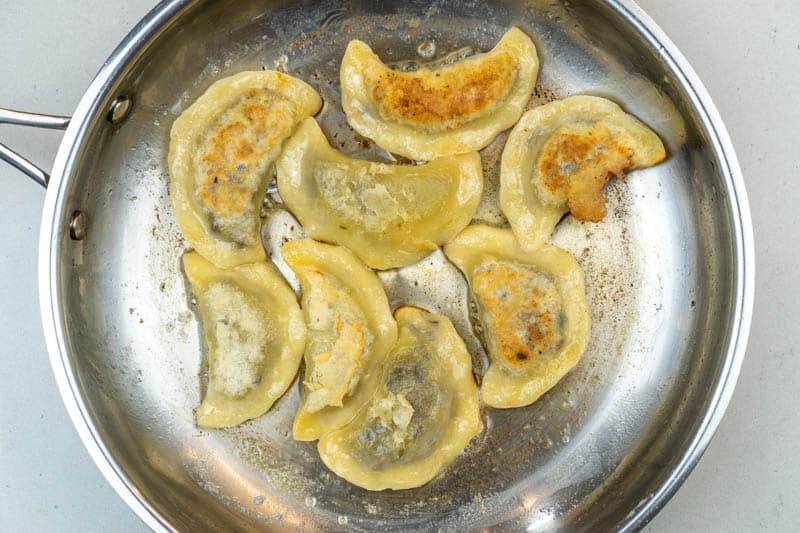
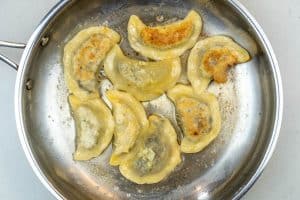
Transfer the pierogi immediately to the skillet with the melted butter and cook on one side until the dumplings are brown and crisp. Then flip and cook on the other side.
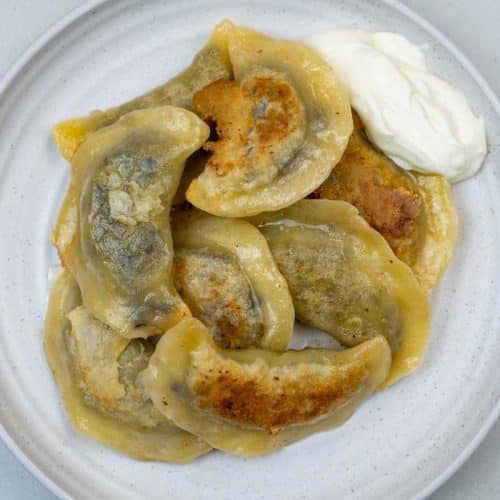
Then, all you need to do is serve! No pierogi is complete without a generous helping of sour cream, so make sure not to forget that!
Mushroom & Sauerkraut Pierogi (Vareniki)
Ingredients
Dough
- 1 egg room temperature
- 100 g (½ cup) sour cream room temperature
- 250 g (2 cups) plain (all-purpose) flour plus more for rolling out
- 5 g (1 tsp) salt (see note 1)
- 50 g (4 tbsp) unsalted butter room temperature, cut into cubes
Filling
- 15 g (½ cup) dried porcini mushrooms
- 50 g (4 tbsp) unsalted butter divided
- 400 g (14 oz) mixed mushrooms such as crimini or portobello, roughly chopped
- ½ yellow onion finely diced
- 150 g (2 cups) sauerkraut drained & rinsed
- Sour cream for serving
Instructions
- In a small bowl, whisk together the egg and the sour cream until well combined. Set aside.

- In a large mixing bowl, add the flour and the salt and whisk to combine. Add the butter and use your fingertips to coat it in the flour. Rub the butter into the flour until it's incorporated and no large pieces of butter remain.
- Make a well in the flour and add the sour cream mixture. Use a wooden spoon or flexible spatula to combine until a shaggy dough forms. Turn out the dough onto a clean work surface and knead gently until it comes together, is soft and lightly tacky – about 3 minutes (see note 2). Cover with plastic and refrigerate for at least 60 minutes and up to 48 hours.
- While the dough is resting, making the filling. Add the porcini mushrooms to a heatproof bowl and over with 250ml (1 cup) of boiling water. Cover the bowl and allow the mushrooms to rehydrate for 15 minutes.
- Meanwhile, add 25g (2 tbsp) of the butter along with 1 tbsp of neutral oil to a large skillet. Set over medium heat. Once the butter is melted and foamy, add the chopped fresh mushrooms along with a generous pinch of salt. Cook, stirring every so often, until the mushrooms have reduced in size and are deeply browned, about 7-10 minutes.
- Add the onions and cook, stirring occasionally, until softened – about 5 minutes.
- Once the porcini mushrooms are rehydrated, remove them from the liquid (reserve the liquid) and roughly chop. Add the porcinis, reserved soaking liquid and the sauerkraut to the pan. Stir to combine and bring to a simmer. Continue simmering until the liquid is reduce – about 3 more minutes. Taste to adjust for seasoning, adding salt and pepper where needed, and remove from the heat.
- When ready to assemble, lightly dust a work surface with flour. Unwrap the rested dough and, using a rolling pin, roll out the dough in a circle until it's about 3mm (⅛ in) thick and it has a diameter of around 50cm (20in). Use an 8cm (3in) circular cutter (or a drinking glass) to punch out roughly 28 rounds from the dough (see note 3).
- Spoon about 1 tablespoon of mushroom filling into the centre of the dough round. Fold the dough over the filling and crimp tightly to seal. Move to a parchment-lined baking tray and repeat with all remaining dough and filling (see note 4).
- Bring a large pot of water to a rolling boil. Add half of the pierogi and cook, stirring to prevent sticking, until they float to the top of the pot – about 2-3 minutes.
- While the dumplings are cooking, add the remaining 25g (2 tbsp) of butter to a large skillet. Set over medium-high heat and melt until bubbling and foaming. Once the pierogi are done boiling, transfer immediately from the water to the skillet. Cook on one side until golden and lightly crisp – about 1-2 minutes, before flipping and cooking on the other side. Transfer to a serving plate and top with sour cream. Serve immediately.




Notes
- Use the weight measurement rather than the volumetric measurement if possible as different varieties and types of salt can vary in volume.
- Avoid adding any additional flour when kneading the dough unless it’s unmanageably sticky.
- Any scraps can be regathered and kneaded into a cohesive ball. Cover with plastic and wait about 15-30 minutes before re-rolling out and cutting more dough circles. I don’t recommend doing this more than once.
- The raw, filled dumplings can be frozen solid on the baking tray. Once frozen, move to an airtight container or a freezer bag and keep in the freezer for up to 3 months. You can cook the pierogi directly from frozen, just not they will take 1-2 minutes longer.
Nutrition
Disclaimer: Nutritional information is automatically generated and provided as guidance only. Accuracy is not guaranteed.
Making homemade pierogi can seem a bit intimidating, but it’s a fun cooking project and the results are absolutely delicious – especially with this cabbage and mushroom filling!
Are you after some mushroom pierogi? Have any questions about this recipe? Let me know in the comments!