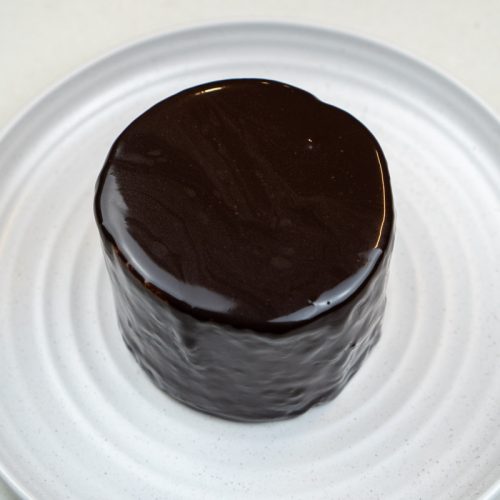
Chocolate Mirror Glaze without Condensed Milk
A mirror glaze is something that looks more complicated than it is. Made the traditional way without corn syrup or condensed milk, this glaze can take your cakes to the next level.
Ingredients
- 60 ml (¼ cup) cool water
- 10 g (3 ½ tsp) powdered gelatin
- 100 g (1 cup) Dutch process cocoa powder
- 120 ml (½ cup) boiling water
- 120 ml (½ cup) cream at least 35% fat
- 200 g (1 cup) sugar
Instructions
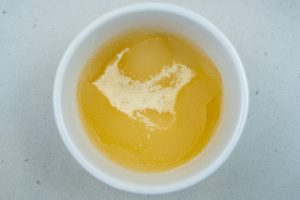
- Add 60ml (¼ cup) cold water to a small bowl. From a height, sprinkle the gelatin over the water, ensuring that it's evenly distributed throughout. Allow to sit and rehydrate for at least 5 minutes.
- Meanwhile, add the cocoa powder to a small saucepan. Pour over the boiling water and stir until combined and it resembles a paste - do not use a whisk as this will incorporate unwanted air.
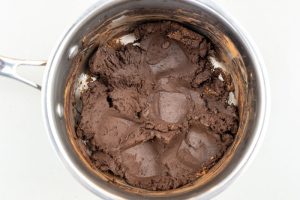
- Pour over the cream and sugar, stir to combine and set over medium heat. Stirring constantly yet gently to avoid incorporating any air bubbles, bring the mixture up to a boil. As soon as it starts to boil, remove the pan from the heat. Add the hydrated gelatin and stir until melted.
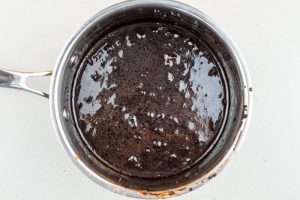
- Set a fine mesh sieve over a medium bowl and pour the glaze through the sieve, discarding any solid bits. Place a kitchen towel on the benchtop and firmly tap the bowl a few times on the towel - this will bring any air bubbles to the surface. Press a piece of cling film directly on the top of the glaze and allow to cool until the glaze reaches 30°C/86°F (see note 2).
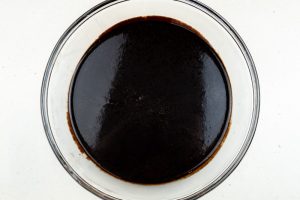
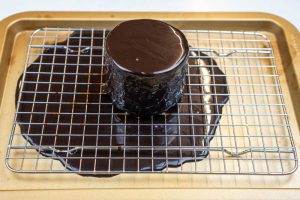
- Transfer the glaze to a measuring jug (or something with a pour spout). Place the cake or dessert you desire to glaze (see note 3) on a wire rack set over a rimmed baking sheet. Working quickly in one fluid motion, evenly pour the glaze over the dessert, allowing the excess to drip off and collect in the baking tray (see note 4). Let the dessert set in the fridge for at least 30 minutes before serving.
Notes
- This recipe yields about 500ml (2 cups) of glaze, which is enough to glaze roughly two 20cm (8in) layer cakes.
- At this point, the glaze can be transferred to an airtight container and refrigerated for up to 2 weeks or frozen for up to 2 months. When ready to use, let it come to room temperature and gently heat it in 20-second bursts on 50% power in the microwave until it reaches 30°C/86°F. Proceed with the remaining steps.
- For the best results, ensure that the surface of the dessert you are glazing is completely smooth. If you're glazing a frozen mousse cake or dessert, pour the glaze as soon as you remove it from the freezer to avoid any condensation from gathering on the surface of the cake.
- Excess glaze - provided it is free of crumbs and debris - can be collected from the tray, melted again and reused.
Nutrition
Calories: 1442kcal | Carbohydrates: 261g | Protein: 32g | Fat: 58g | Saturated Fat: 36g | Polyunsaturated Fat: 2g | Monounsaturated Fat: 16g | Cholesterol: 136mg | Sodium: 75mg | Potassium: 1640mg | Fiber: 37g | Sugar: 205g | Vitamin A: 1775IU | Vitamin C: 1mg | Calcium: 215mg | Iron: 14mg
Disclaimer: Nutritional information is automatically generated and provided as guidance only. Accuracy is not guaranteed.
Tried this recipe or have questions?Click here to leave a rating and/or comment!
