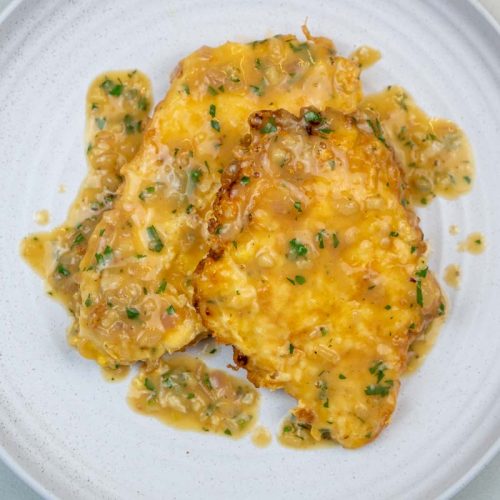
Chicken Francese Without Wine
A brighter, wine-free take on the Italian-American classic, this pan-fried chicken is finished in a silky lemon-butter pan sauce sharpened with a touch of sherry vinegar.
Ingredients
- 4 boneless skinless chicken breasts pounded to an even 5mm (¼in) thickness
- 120 ml (½ cup) neutral oil such as canola or sunflower
- 140 g (1 cup + 2 tbsp) plain (all-purpose) flour divided
- 3 g (½ tsp) salt divided (see note 1)
- ½ tsp garlic powder
- ½ tsp freshly ground black pepper
- 2 eggs beaten
- 50 g (3 tbsp) unsalted butter divided, chilled
- 1 shallot minced
- 2 cloves garlic minced
- 250 ml (1 cup) chicken stock (see note 2)
- 4 strips lemon zest removed from lemon with a vegetable peeler
- 45 ml (3 tbsp) lemon juice
- 1 tsp sherry vinegar
- 1 tbsp flat-leaf parsley chopped
Instructions
- Pat the chicken breasts dry with paper towels and season both sides with salt and pepper. Add the oil to a large skillet and set over medium heat. Add 125g (1 cup) of flour, ¼ tsp salt, black pepper and garlic powder to a wide, shallow bowl and whisk to combine. Dredge the chicken breasts in the flour, ensuring they're evenly coated, and shake off any excess.
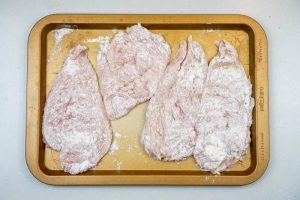
- Add the eggs to a separate shallow dish. Once the oil is shimmering, work one chicken breast at a time and coat the chicken in the beaten eggs, allow any excess to drip off, then gently place the chicken in the hot oil. Repeat with the remaining chicken, working in batches to avoid overcrowding the pan. Cook until the chicken is golden and crisp on one side, about 3-5 minutes. Flip and repeat on the other side. Remove from the pan and set aside.
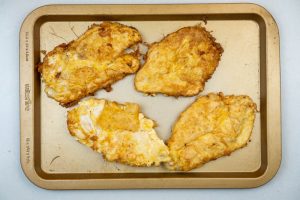
- Carefully pour any remaining oil from the pan and wipe out the pan with paper towels - there is no need to wash it. Add half of the butter to the pan and set it over medium heat. Once melted, add the shallot along with the remaining ¼ tsp of salt. Cook, stirring occasionally, until softened - about 2 minutes. Add the garlic and cook for another 30 seconds.
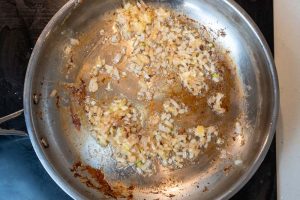
- Add the remaining 15g (2 tbsp) of flour to the pan and stir into the shallot and garlic mixture. Cook for 2-3 minutes, until it smells faintly toasted. Whisking constantly, stream in the chicken stock. Stir in the lemon zest and bring to a simmer. Simmer for 5 minutes, until the sauce is thick and reduced.
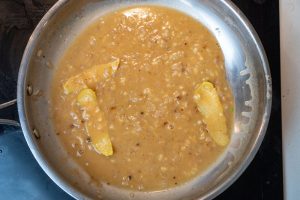
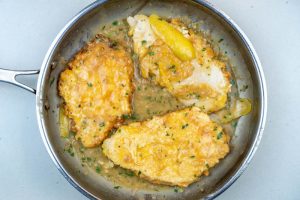
- Reduce the heat to the lowest setting. Cut the remaining butter into 4 pieces. Working one piece at a time, stir the butter into the sauce. Stir in the lemon juice, the sherry vinegar and the parsley. Taste to adjust for seasoning, adding salt and pepper if necessary. Add the chicken, along with any accumulated juices, and cook just until the chicken is heated completely through. Remove from the heat and serve.
Notes
- For best results, measure salt by weight, as different salts vary in crystal size and density.
- For best results, use unsalted stock so you can control the seasoning of the final dish.
Nutrition
Calories: 285kcal | Carbohydrates: 5g | Protein: 29g | Fat: 16g | Saturated Fat: 8g | Polyunsaturated Fat: 1g | Monounsaturated Fat: 5g | Trans Fat: 0.4g | Cholesterol: 183mg | Sodium: 741mg | Potassium: 572mg | Fiber: 1g | Sugar: 2g | Vitamin A: 554IU | Vitamin C: 10mg | Calcium: 33mg | Iron: 1mg
Disclaimer: Nutritional information is automatically generated and provided as guidance only. Accuracy is not guaranteed.
Tried this recipe or have questions?Click here to leave a rating and/or comment!
